
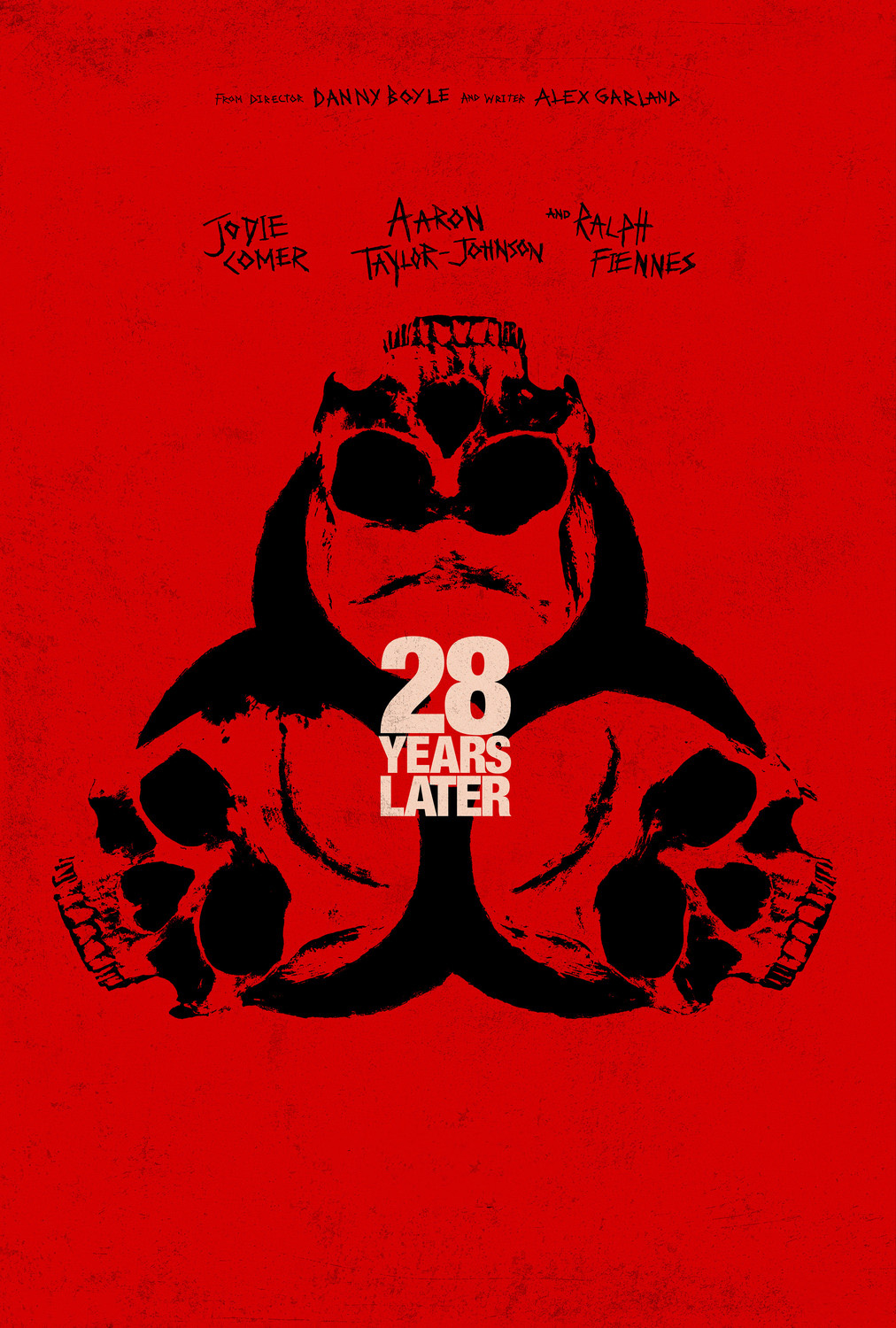


Time Didn’t Heal Anything?!

For myself, when it comes to viewing cinema/film and all the genre’s of the said artistic form that there is to offer, it’s fair to state how little of interest I did have in relation to the horror genre. Indeed, while it can’t be denied that it is one of the more important brackets of filmic history – for the way in which it has openly invited aspiring film-makers to create low-budget features that have turned into cult classics (namely in Psycho and The Texas Chainsaw Massacre) – the horror genre has always, somewhat, irked me in the manner in which contextual trends and obvious narrative decisions are plagued in many like-minded films of similar ilk. It’s truly the horror films in which we’re invited to see more thoughtful and experimental film-making that elevates the horror in which we’re prescribed to behold. One such example of this can be seen in Danny Boyle’s 28 Days Later where we’re presented with a post-apocalyptic scenario that is displayed through visceral means; an output where digital video cameras are exploited through rather kinetic camera angles that expertly balances scenes of white-knuckled, hell-for-leather horror with moments of intimate beauty. Much of this, and more, is established in Boyle’s returning sequel in the form of 28 Years Later which see’s Alex Garland, who after launching a successful directorial career (Annihilation), is back penning a franchise. However, where we see risk-taking in the film-making department, we too see prospect in the said films premise where we’re presented with a story and sub-texts that are truly worth exploring; much like it’s initially preceding feature of yesteryear…
It’s been almost three decades since the rage virus escaped a biological weapons laboratory, and now, still in a ruthlessly enforced quarantine, some have found ways to exist amidst the infected. One such group of survivors lives on a small island connected to the mainland by a single, heavily-defended causeway. When one of the group leaves the island on a mission into the dark heart of the mainland, he discovers secrets, wonders, and horrors that have mutated not only the infected but other survivors as well.
In theory and in visual practice, 28 Years Later embraces within its own post-apocalyptic roots – through not only in its own premise but in the manner in which we perceive idiosyncrasies where we’re presented with visceral sequences of horror that coincide with the genre. Yet, upon reflection of the events that take place in Boyle’s latest and much expected follow-up, there’s an argument to be made that 28 Years Later simply does more that provide a simplistic continuation from that events that took place in the preceding features of the the now-franchise. Indeed, whilst 28 Days Later breathed a legacy and visual identity that many films thereafter have borrowed narrative and formative qualities from, 28 Years Later distinctively re-imagines its own overexposed genre. The oddball film begins with a roomful of children watching Teletubbies, the BBC kids show that first broadcast in 1997, 28 years ago. Before you can say, “Big hug!”, a gaggle of Scottish children are besieged by rage-infected walking-dead, a horrifying opening flashback drenched in dark humour. From there, we leap 28 years later, to a British Isles cut off from the outside world. The infected still roam the wilderness. On Lindisfarne, aka Holy Island, lies a survivors’ civilisation, attached to the mainland by a causeway only accessible when the tide recedes. There lives 12-year-old Spike (Alfie Williams, an outstanding new talent), a boy who’s never been somewhere where he couldn’t see the sea. “It’s so big,” he gasps when his dad Jamie (Aaron Taylor-Johnson) escorts him inland for the first time. At the very core of the narrative, it’s fair to surmise that we’re greeted with a coming-of-age feature centred around the character of Spike who presently challenges the current status-quo and leaves behind his childhood ways (symbolised through his abandonment of his red Power Ranger) to help and cure his mum Isla (Jodie Comer).
Yet, aside this obvious notion, 28 Years Later brims with thematic resonances, a canvas on which to illustrate a national identity-crisis. One of the more clearer themes is this idea of revisionism and how Years evokes this post-apocalyptic society about how they tell themselves stories of yesteryear; the myth-building that creates nations, a fiction rather than truth. You might even go as so far as to highlight how there is a close Brexit analogy in a country experiencing isolationism — the rage-ravaged Britain secluded from the world; its people secluded from their own land. The distinctly British post-apocalyptic society is part Blitz-spirit wartime-rationing aesthetic, part medieval fortress – as eclipsed by Boyle who repeatedly cuts to black and white World War footage. It’s an interesting distinction compared to what is proposed at the end of Days and rather embroils this specific thematic with Years’ clear post-apocalyptic horror. Yes, these ideas are richly woven, but worn lightly since much more will be elaborated in the subsequent films to come. What comes after this apparent and initial idea of a society finding comfort in old/traditional routes are ideas that rather evolve Years’ own proposed horror. Whereas Spike’s colony of people have reverted back to familiar societal grounds, the infected have evolved and thrum with a pervasive sense of immediate danger to the characters. In a series of sequences that may remind audiences of John Hillcoat’s The Road, both Spike and Jamie face the mainland with terrors of hoards from the infected and are eventually halted by several kinds of infected (as seen in The Last of Us) with “fast ones”, “slow ones”, and most terrifyingly, the Predator-esque “Alphas”. The film’s opening half, in particular, is phenomenal — an electrifying exercise in terror, amplified by Young Fathers’ astonishing score. Whilst the second half never bores – with every moment bringing forth a new discovery and a curious nod to Alfonso Cuaron’s Children of Men and this idea of of fertility, it’s an unruly odyssey that will divide cinemagoers. This comes ahead with its ending sequence which will turn people’s heads one way or the other. For myself, in regards to Years’ much-discussed ending, all I can say is that it is ‘clever’ as it not only comes full-circle from the said films opening moments, but its an ending sequence that redefines its own horror and sets up a scenario in the upcoming second feature that is sure to be as haunting as what has been proposed already.

As impressed as I was with Years’ manner in employing a narrative and premise that utilises horrific genre tropes to its advantage and creates and meandering story that is better every time you think about it, much of the same praise can be hailed for the films formal approach; specifically with the use of the camera and editing. Partially and most noted by critics and audience members alike, some shots are executed through the use of Iphone’s, besting and updating Day’s scuzzy digital-camcorder aesthetic and provides this primal and raw sensibility to the proceedings that brings this sense of dread. This particular feeling is also accentuated through the different kills of the infected which are captured through by bullet-time camera rigs, providing a jarring yet innate feeling from the multi-angle edits. The visual style, like the films narrative, also likes to shift its paradigm and elevates the aforementioned themes even further. The most apt example of this can be perceived near the beginning where we’re presented with a montage sequence of captured/archived footage that is spliced in-between the teachings of the island. It not only suggests further of this idea of regression and looking back at a time of great virtue, but it also illuminates the subtle horrors of such regression as emphasised through the use of Rudyard Kipling’s “Boots” poem. It’s startling, but engaging. Finally to note of the films formal approach would be little moments of wonder and mythos where the camera lens would be filtered red viewing the infected hiding and riving in the woods or a wondrous moment where both Spike and Jamie are running for their lives as an Alpha is gaining on the both of them.
28 Years Later is a deeply assiduous film, a picture whose sincerity is initially off putting until it’s endearing. Toward the end, through the concept of “memento mori,” this ‘zombie’ picture attempts to grapple with the toll of the onscreen death that’s filled viewers’ minds for decades now. It’s a desire that isn’t inspired by a need to craft elongated arcs, future callbacks or even the return of former characters. The decision to consider the finality of death and how we remember those who’ve passed on is a gesture to the human in a franchise filled with the inhuman. The sequel needed is both the film you expect, and the one you don’t. There’s blood for sure, but also real guts, brain and heart. Indeed, it’s the sequel the original film deserves, which is culminated in a disparaging final few minutes which is set to be one of the most divisive film endings in cinema history. We’re both perplexed and blessed to receive such a film that will create more discourse and discussion than its predecessors…
★ ★ ★ ★ ☆ – Alex Rabbitte