
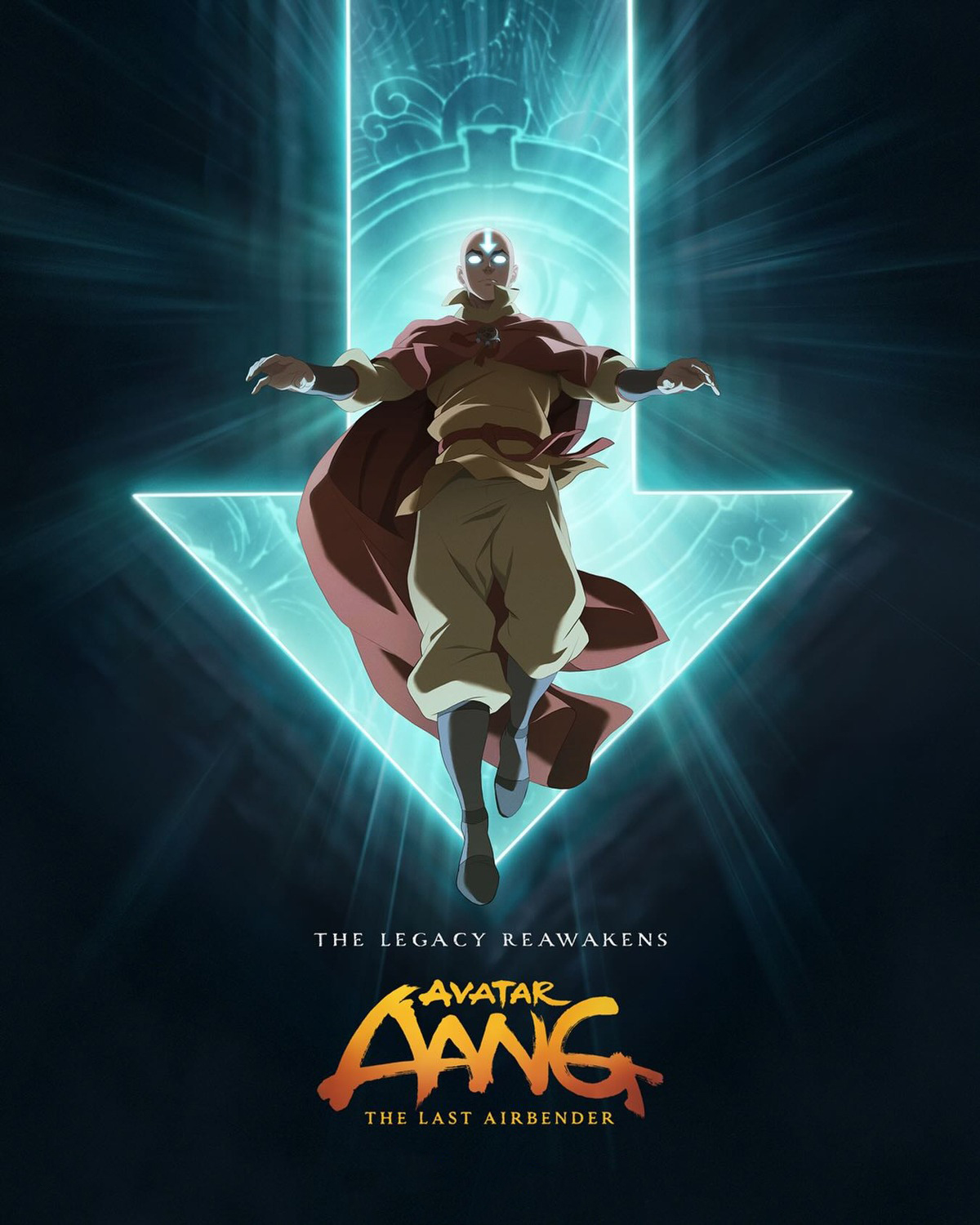


A Generous Gesture

There are legacy sequels, and then there are acts of faith. For every Top Gun: Maverick that justifies its existence, there’s a dozen revivals content to coast on warm memories and familiar faces. Avatar Aang: The Last Airbender arrives carrying an even heavier burden. The original animated series isn’t simply beloved; it’s canonised, spoken of in the reverential tones usually reserved for The Empire Strikes Back or the first time someone discovered Studio Ghibli. To continue that story, rather than merely revisit it, demands confidence bordering on audacity. Fortunately, director Lauren Montgomery understands that the secret to Avatar has never been its elemental spectacle—it’s the humanity beneath the bending. The result is a film that feels less like a victory lap and more like the opening chapter of adulthood for characters who have grown up alongside their audience.
Set over a decade after the defeat of Ozai, the film reunites Team Avatar as young adults living in a fragile era of peace. When rumours emerge of an ancient Air Nomad artefact capable of restoring what was lost during the genocide, Aang embarks on a globe-spanning quest before a dangerous faction can claim it first. Along the way, old friendships are tested, new allies emerge—including the enigmatic airbender Tagah—and familiar faces discover that saving the world is somehow easier than preserving it. It’s classic Avatar: part road movie, part fantasy epic, with the right balance of cabbage-related levity to remind you that this universe has never taken itself too seriously and story stakes that naturally pull you in.
If the story occasionally plays the familiar notes, of which we will the discuss, the animation is anything but is the first thing to truly take note of. Quite simply, this is the most beautiful Avatar has ever looked. Television budgets once forced bending to imply scale; here, it revels in it. Earthbending crashes with geological force, fire dances like liquid calligraphy, water flows with painterly elegance, and airbending finally possesses the impossible grace the original series always promised. Every frame appears handcrafted rather than manufactured, combining the expressive character animation of the Nickelodeon series with cinematic lighting, sweeping camera movement and astonishing environmental detail. Action scenes aren’t merely bigger; they’re choreographed with a balletic precision that makes each duel feel like a conversation between philosophies rather than fists. It is a glorious reminder that animation is not a genre but a medium, and one capable of visual poetry when entrusted to artists who understand movement as emotion.
More impressive still is the film’s willingness to let its characters age; a cinematic decision that I loved when first hearing about said feature. This isn’t the carefree Aang who once hid from destiny inside an iceberg. Eric Nam’s older Avatar carries the quiet exhaustion of someone trying to rebuild an extinct civilisation while simultaneously acting as the world’s moral compass. The screenplay leans into survivor’s guilt, cultural identity and the impossible tension between honouring the past and embracing the future. These are hardly revolutionary themes for Avatar, but they’re explored with a maturity that reflects both its characters and its audience. The film wisely avoids drowning itself in nostalgia, instead asking what peace actually costs after the war ends. Not every subplot lands—some members of Team Avatar inevitably spend more time on the bench than in the spotlight—but the emotional core remains steadfast. Much can’t be said of the film’s story structure since it doesn’t do enough to truly compose its narrative beats in a daedal fashion. Like the original series however, it’s ultimately about balance: between duty and desire, memory and progress, hope and grief. Much can’t be said of the film’s story structure since it doesn’t do enough to truly compose its narrative beats in a daedal fashion.

Which makes Paramount’s decision to forgo a full theatrical release all the more discouraging and averse. Clearly from my own perspective, this is a film built for towering cinema screens and thunderous surround sound, where every burst of elemental energy and every soaring flight atop Appa could have been shared with an audience holding its collective breath. Instead, the fact that the Avatar Aang was to be leaked is truly a great shame considering how fantastical and thrilling the viewing pleasure was – even on a small computer screen. With all the sincerity I can share, I do hope that Avatar Studios’ next filmic outings don’t pan-out like what happened with the release of this film and I hope that, maybe one day, Avatar Aang is given its fair-due’s on the silver screen within the near future.
Avatar Aang: The Last Airbender doesn’t eclipse the television masterpiece that inspired it, nor does it try to. Instead, it does something arguably more difficult: it earns the right to stand beside it. Visually breathtaking, emotionally sincere and refreshingly confident in allowing its heroes to evolve, it marks a triumphant beginning for the next era of the Avatar universe. Like Aang himself, the film understands that growth isn’t about abandoning who you were—it’s about carrying those lessons forward. And if this is the standard Avatar Studios intends to set, then the future of the Four Nations suddenly looks as bright as a comet streaking across the night sky.
★ ★ ★ ★ ☆ – Alex Rabbitte